Medical Devices
Translation Services
Launch medical devices safely and quickly across markets with translation that’s accurate, compliant and secure.
Launch Globally With Confidence
Multilingual content in medical devices is high stakes. From IFUs and DFUs to software UI and post-market reports, every word must meet regulatory expectations and be clear to real users.
How We Help
We combine specialist linguists, medical device SMEs, and a secure enterprise platform with an AI-enabled layer. This delivers faster turnaround, consistent terminology, and audit-ready workflows that support market approvals and ongoing updates.

  • Medical device translation services mapped to risk and document type
  • Terminology governance for product, safety and labeling content
  • Secure, traceable production that fits your QMS and supplier controls
  • Flexible service levels, including ISO 17100 translation with review and ISO 18587 MTPE where appropriate
Localization for the
Full Device Lifecycle
MedTech Translation Designed for Regulatory Compliance
In this field, localization is risk management.

Our workflows are designed to support supplier controls, traceability and audit readiness.

We align service level to content risk, apply controlled terminology, run automated QA checks, and capture feedback so every update improves your terminology assets and translation memory.
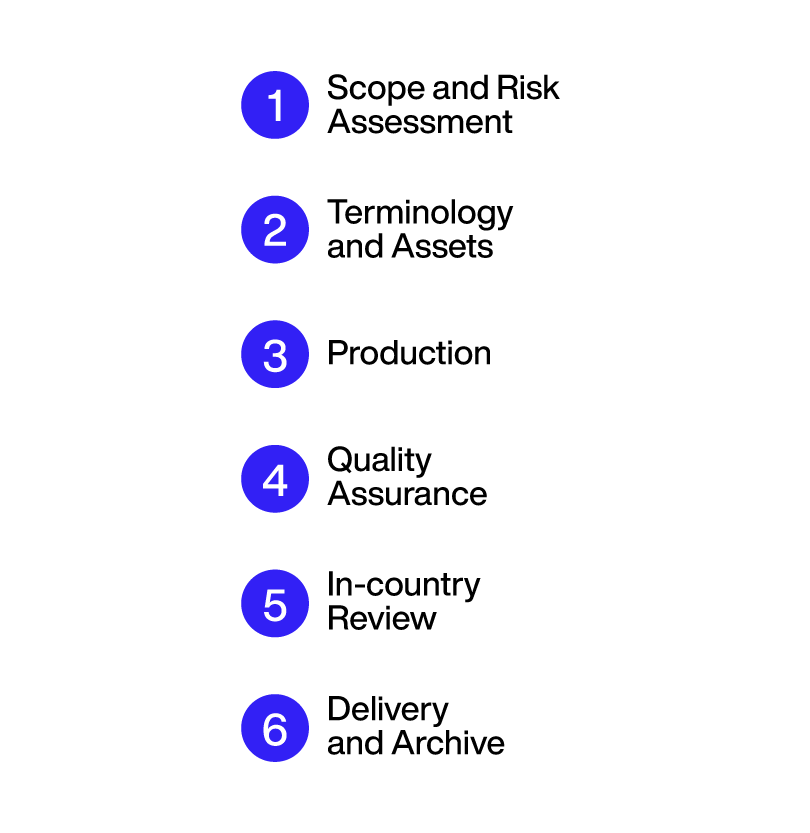
The Process
Our workflow is built to keep translations accurate, consistent and audit-ready from the start.

We align on risk, terminology and context upfront, then combine specialist linguists with STREAM AI’s secure environment and automated QA to deliver reliable outputs at speed.

Feedback is captured cleanly, updates flow into your terminology and Translation Memory, and every file is fully traceable so you receive submission-ready content with minimal rework.
How MedDev Content Is Typically Scoped
Not all medical device content carries the same regulatory or patient risk.
Effective localization programs scope work based on impact and use. For example:

High-risk content IFUs, safety information, and labeling often require full human translation, multi-step review, and strict terminology control.

Medium-risk content Technical documentation or training materials may combine specialist translation with structured QA.

Lower-risk content Internal or reference materials can sometimes use lighter workflows while maintaining terminology consistency. A risk-based approach helps balance compliance, speed, and cost — while keeping patient-facing and regulatory content under the highest controls.
How We Measure Translation Quality
We use Multidimensional Quality Metrics to track accuracy, terminology, fluency, style and locale conventions. Scores feed root-cause analysis and continuous improvement inside STREAM AI.

Security
Your content is protected with enterprise level security and audited controls. We operate under HITRUST r2 and ISO-based information security programs and align our processes to your unique requirements.
alignment for documentation and supplier controls
for translation services
for machine translation post-editing where acceptable
Built for Compliance, Speed & Consistency

Our hybrid model combines specialist linguists, medical device SMEs, and STREAM AI, our secure enterprise translation platform.

You get:

  • ISO 17100 translation or ISO 18587 MTPE depending on risk
  • Centralized terminology governance and medical terminology control
  • Streamlined handoffs that fit your QMS and supplier controls
  • Faster turnaround times without losing regulatory precision
  • Audit-ready processes aligned to ISO 13485
FAQ
STREAM AI
Built For High-Risk Content.
Trusted For Medical Device projects.
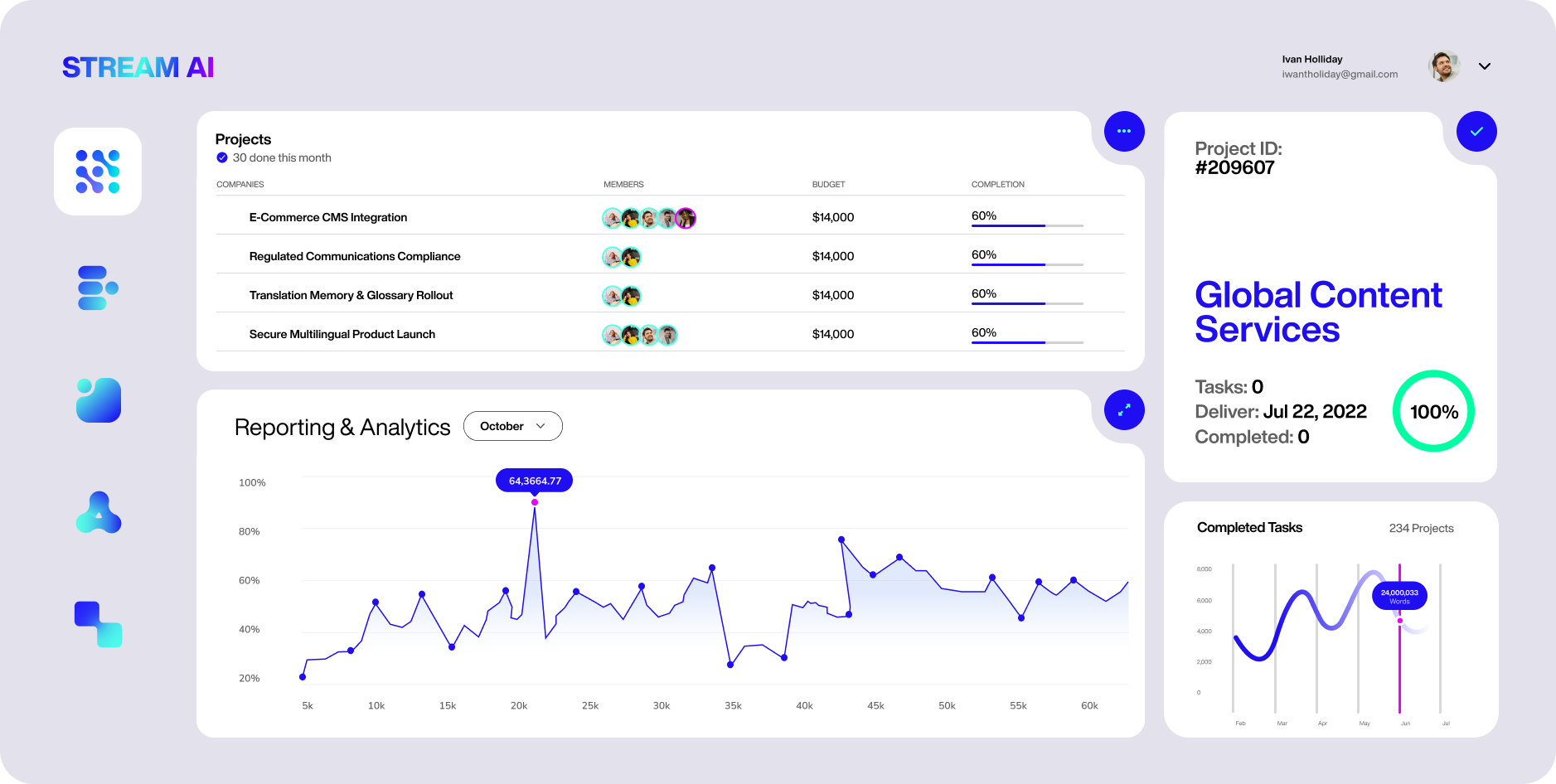
STREAM AI, our proprietary platform, unifies translation memory, term bases, machine translation and automated QA in a secure workspace. It gives linguists context, flags critical issues early and keeps assets synchronized across projects so each release builds on the last.